





Does perfume necessarily need alcohol? For decades, ethanol has played a central role in fine-fragrance formulation. But a new generation of technologies aims to broaden the possibilities of the category.
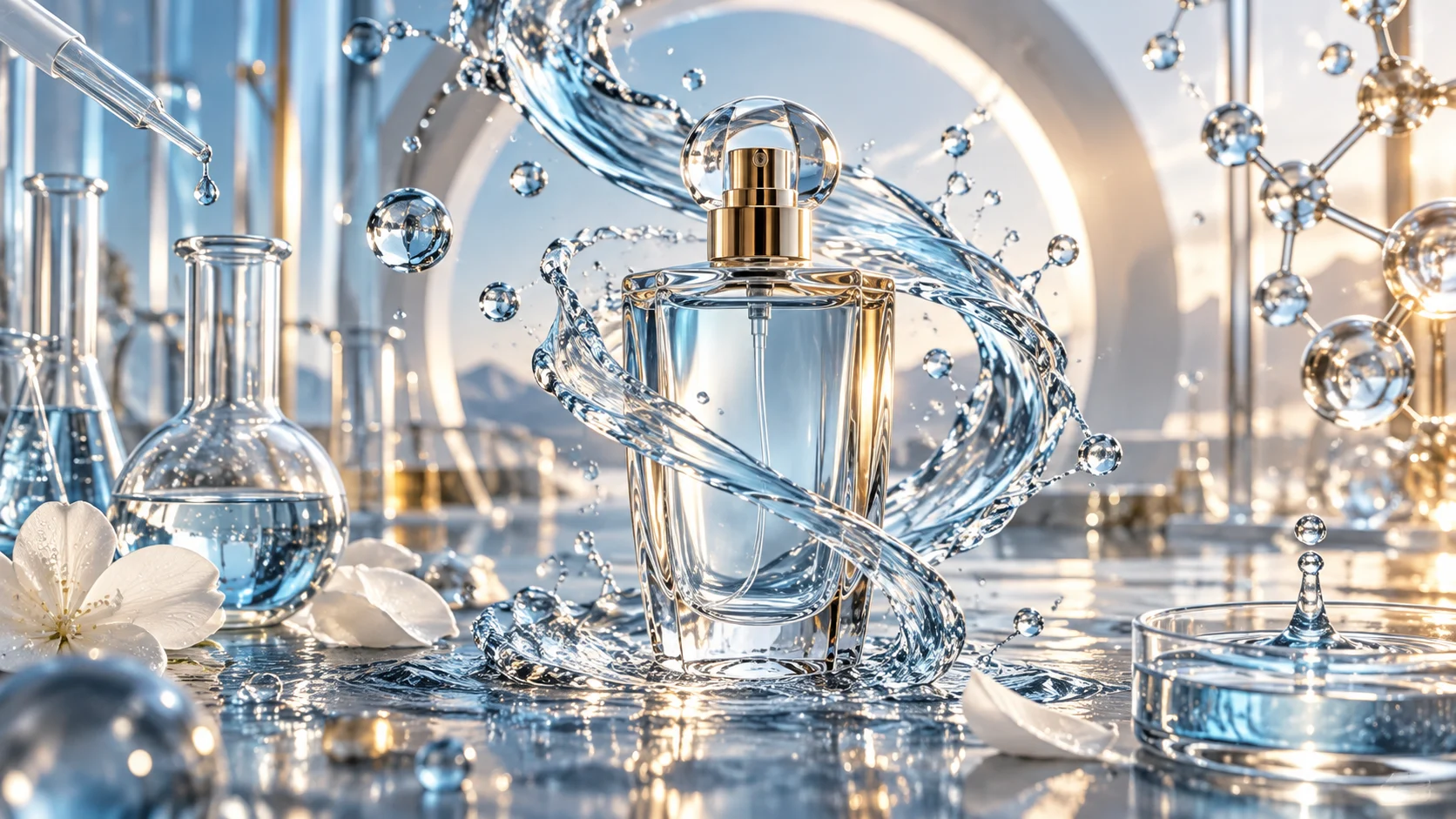
On September 30, 2026, IFF officially introduced AQUASCENT, a new vegan, water-based carrier system developed for fine fragrance.
The challenge of creating a water-based perfume
One of the main technical problems in water-based formulas is the natural incompatibility between water and many aromatic materials. Fragrance oils can create cloudiness, instability or phase separation when added directly to an aqueous base.
AQUASCENT is designed to keep the fragrance visually clear while supporting significantly higher fragrance loads than many conventional water-based systems.
From 10% to 25% fragrance load
According to IFF, the technology supports fragrance loads between 10% and 25%. The company compares this performance with similar systems that typically reach around 15%.
This matters because it brings some water-based formulas closer to concentrations found in traditional fine fragrance.
No intentionally added ethanol
AQUASCENT was developed without intentionally added ethanol and uses biodegradable materials in its proprietary formula. IFF also highlights sensory benefits related to hydration and the absence of a sticky skin feel.
This shows that the objective is not simply to remove alcohol, but to create a system capable of delivering an olfactory and cosmetic experience compatible with fine-fragrance expectations.
Interest in water-based perfume is growing
Digital-monitoring data released by IFF show that global Google searches for “water-based perfumes” increased 18% year-to-date in 2026. Related TikTok content surpassed 15 million views.
These figures do not mean alcoholic perfumery is being replaced. They do indicate, however, growing consumer and brand interest in other application formats and formulation systems.
Logistics and sustainability also enter the discussion
The technology was designed to allow concentrated transport and later addition of water during final manufacturing. In theory, this can reduce shipping volume and weight, bringing logistical and environmental advantages.
In the fragrance industry, where liquids are shipped internationally in large volumes, any reduction in transport weight can become relevant at scale.
The future of perfumery may involve more formats
For a long time, concentration discussions revolved mainly around Eau de Cologne, Eau de Toilette, Eau de Parfum and Extrait. Other formats are now gaining space: water-based perfumes, mists, perfume oils, balms and hybrid products between fragrance and skincare.
AQUASCENT is another sign that the next important transformation in perfumery may not happen only in olfactory notes. It may also happen in the architecture of the formula itself.