






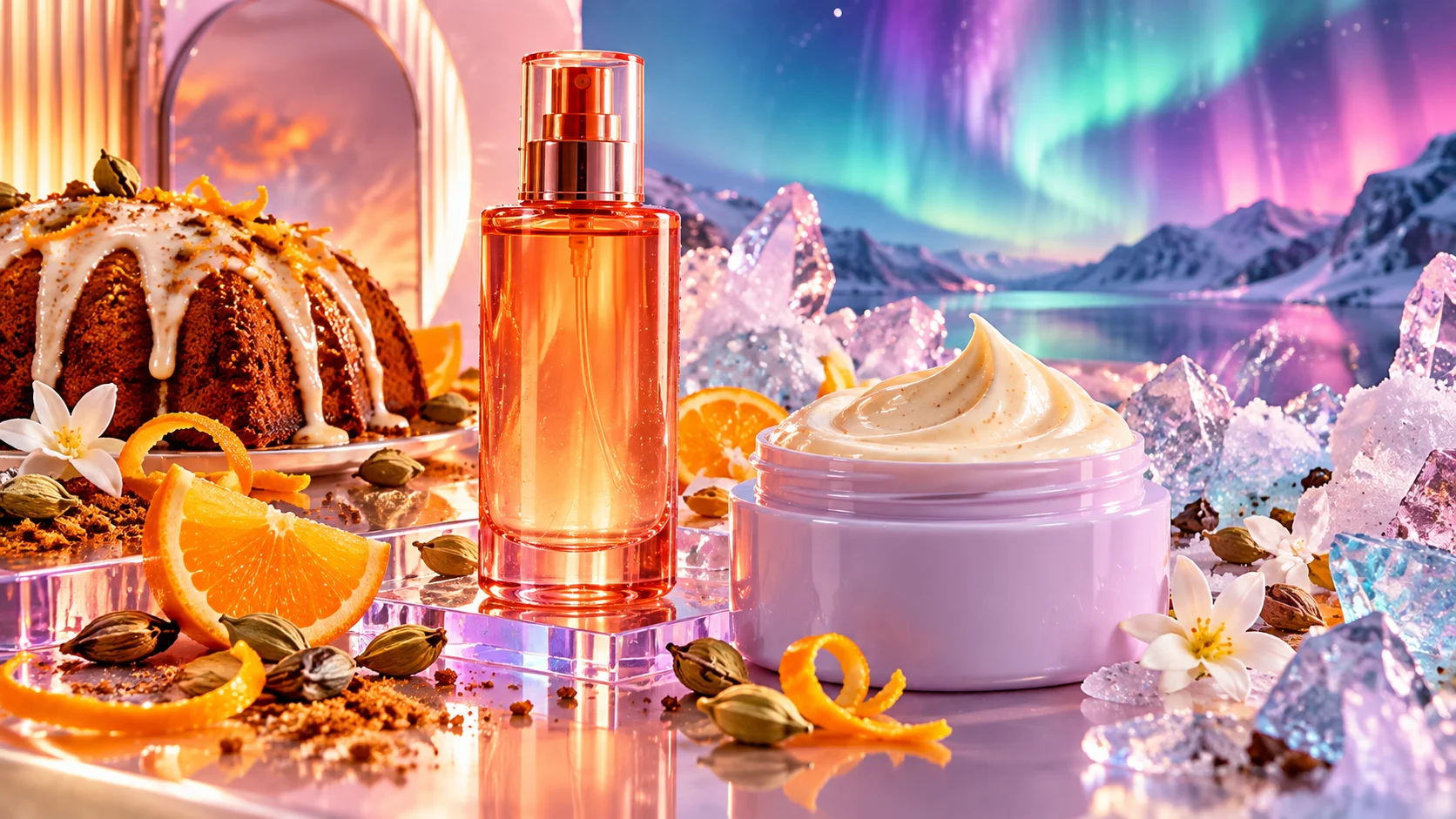
e.l.f. Beauty has decided to move more aggressively into one of beauty’s fastest-growing categories: fragrance and body care. On October 5, 2026, the company announced e.l.f. POP, a new platform designed to turn destinations, music, illustration and scent into product experiences.
The debut arrives with POP: Tromsø, a limited-edition collection inspired by the Norwegian city known for Arctic landscapes and the northern lights. At the center is the gourmand signature Spicy Bundt Nice, built around spiced cake, orange zest, cardamom, buttercream, cedar and warm musk.
The line starts small — fragrance mist, body cream and a travel kit — but the most important announcement is what comes next: e.l.f. has already confirmed new destination-inspired fragrances for January 2027.
It is not just a seasonal launch
If the collection ended with Tromsø, it could be treated as another holiday activation. But POP itself was designed as a platform.
According to the official announcement from e.l.f. Beauty, the idea is to transport consumers to different places through “sensorial destinations.”
That creates a scalable brand architecture. Tromsø can be replaced by another city, climate, culture or emotional state without abandoning the core identity.
It is a strategy similar to travel collections in perfumery, but adapted to the model of a highly digital mass-market brand.
Why enter fragrance now?
The company cites Mintel data identifying fragrance as the fastest-growing beauty category globally. It also highlights that a significant share of consumers look to fragrance to influence mood or emotion.
Those data help explain the timing.
Makeup remains e.l.f.’s historical core, but fragrance offers something different: repeat purchase, gifting potential, strong social-media appeal and an emotional relationship that can be harder to build with a purely functional item.
Body care also allows the brand to create layering routines, increasing the number of products inside the same scent story.
Spicy Bundt Nice and the power of gourmand
The olfactory choice also appears deliberate.
Spicy Bundt Nice combines spiced cake, orange, cardamom and buttercream — exactly the type of seasonal gourmand that fits current interest in edible, creamy and comforting smells.
At the same time, cedar and musk help prevent the signature from reading only as “bakery scent.”
The collection connects directly to a phenomenon Atlas has been following across other stories: gourmand is no longer merely a perfume subgenre. It has become a language that moves across body care, home fragrance, hair care and mass-market products.
TikTok Shop is part of the launch from day one
Perhaps the most important commercial element is distribution.
The collection debuted first on TikTok Shop in the United States on October 4 and reached e.l.f.’s own digital channels the following day, with expansion to Amazon.
This shows an interesting reversal. For years, brands launched products in retail and then used social media to promote them. Now, the social platform itself can become the initial point of sale.
Fragrance is particularly well suited to this model because creators can turn an invisible product — scent — into a visual narrative through reaction, description, comparison and aesthetics.
How do you sell scent when the consumer cannot smell it?
This has always been one of the biggest challenges of fragrance e-commerce. Consumers cannot smell a screen.
Digital brands have learned to solve part of this problem through emotional language. Instead of trying to describe molecules, they build scenes: winter travel, freshly baked cake, northern lights, comfort, warm dessert.
e.l.f. takes that logic to the extreme.
Tromsø is not only a geographic reference. It works as a setting that makes the fragrance easier to imagine.
The campaign uses local artists
Another relevant detail is the collaboration with Norwegian creators. Illustrator Esra Røise developed visual elements for the collection, while singer SKAAR created the music used in the campaign.
This helps avoid a generic “destination” aesthetic. By involving artists associated with the country, the brand tries to give the concept more authenticity.
It also creates additional content: packaging, music and fragrance can circulate independently across social platforms.
Accessible pricing as a competitive weapon
In the United States, the main items were announced around the US$12 to US$13 range. That places e.l.f. in a very different territory from traditional fine fragrance.
The objective is not to replace US$150 or US$300 perfumes. It is to compete for frequency, experimentation and impulse purchase.
For younger consumers, this reduces the risk of trying a new scent. Instead of buying an expensive bottle, they can test a body cream or mist and decide whether they want to stay within that olfactory signature.
Fragrance as the next frontier for makeup brands
e.l.f.’s move reinforces a broader trend. Makeup and skincare brands are realizing that fragrance and body care can expand their relationship with consumers.
The beauty market is becoming less divided by rigid categories. The same company can work across makeup, hair, skin, body and scent within one narrative.
For a company whose greatest strength lies in cultural speed and digital marketing, fragrance offers a new territory in which to apply those skills.
What to watch in 2027
The real test for e.l.f. POP will begin when Tromsø is no longer new.
If future cities create distinct olfactory identities and form a recognizable collection, the platform could turn e.l.f. into a relevant new player in accessible fragrance.
If the project depends only on limited editions and seasonal hype, it may remain a promotional extension.
For now, the launch matters because it shows how the market is changing: perfumery is attracting not only new fragrance houses, but also beauty companies that already master community, creator marketing and social commerce — and now want to turn that reach into scent.