






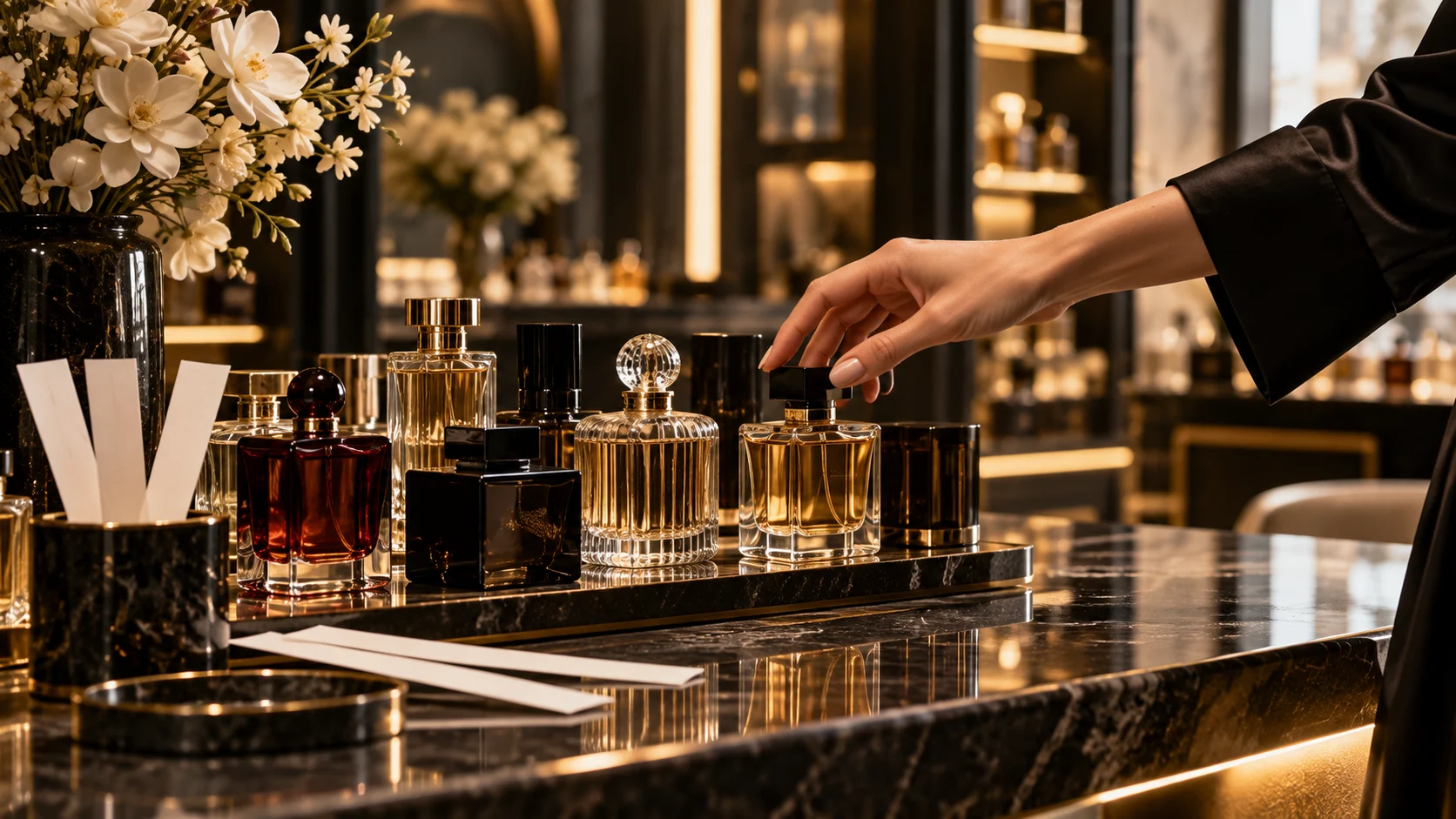
Choosing a perfume does not have to be a guessing game. The best choice comes from a combination of personal taste, concentration, olfactory family, climate, occasion and, above all, how the fragrance develops on your skin. Instead of looking only for “the most complimented perfume,” it is worth understanding what you genuinely enjoy smelling and in which situations you plan to wear it.
Start with your taste, not the trend
Before looking at brands or new releases, think about the smells that naturally attract you. Do you prefer fresh and light fragrances, sweet and enveloping ones, dry woods, elegant florals or spicy compositions? This first impression already helps narrow the options considerably.
A useful strategy is to remember perfumes you have enjoyed before and notice which characteristics repeat. Often, preference is not about one isolated note, but about the combination: citrus with woods, florals with musk, vanilla with amber or fruits with white flowers, for example.
Understand concentration
Terms such as Parfum, Eau de Parfum and Eau de Toilette broadly indicate different ranges of aromatic-compound concentration. This can influence intensity, longevity and the way a fragrance projects, although final performance also depends on the formula, raw materials, skin and environment.
That is why concentration should not be treated as an absolute rule. An Eau de Toilette can have excellent presence, while an Eau de Parfum may be designed to stay closer to the skin.
Observe the olfactory pyramid
Top notes are perceived first and usually shape the initial impression. Heart notes emerge later and help define the fragrance’s personality. Base notes last longer and give depth to the composition.
When choosing a perfume, do not decide based only on the first few minutes. The opening can be completely different from what you smell one or two hours later.
Consider climate and temperature
Temperature and humidity influence how a perfume is perceived. On very hot days, fresh, citrus, aquatic, green or aromatic compositions can feel more comfortable. In cooler weather, amber, spicy, woody and gourmand fragrances often become easier to wear.
This does not mean there are strict prohibitions. The important point is to control how much you apply and understand how a particular composition behaves in the environment where it will be worn.
Think about the occasion
A fragrance for work may call for a more discreet presence, while a perfume for evening events may support greater intensity. For dates, travel or everyday wear, the choice depends on the kind of presence you want to convey.
Instead of searching for one fragrance “for everything,” many people prefer to build a small collection with different roles: one versatile option, one fresh fragrance, one more striking scent and another for special occasions.
Test on skin before deciding
A blotter strip is useful for an initial screening, but skin shows more clearly how a fragrance develops over time. Body temperature, skin oiliness and other factors can change the way certain accords appear.
If possible, apply a small amount, wait for the initial drydown and follow the evolution for a few hours. Avoid testing too many fragrances at once, because sensory overload can make comparison more difficult.
Do not confuse performance with quality
Longevity and projection are important characteristics, but they do not define the quality of a fragrance by themselves. A perfume can be intentionally intimate and still be sophisticated in construction. Another may project intensely and simply not suit your style.
The more useful question is: do you like the way this perfume behaves and the way it makes you feel?
Choosing perfume is about building a reference library
The more you learn about notes, accords, olfactory families and different creative styles, the easier it becomes to recognize your preferences. Atlas Parfum organizes this information to turn fragrance selection into an experience of discovery rather than an impulse purchase.