






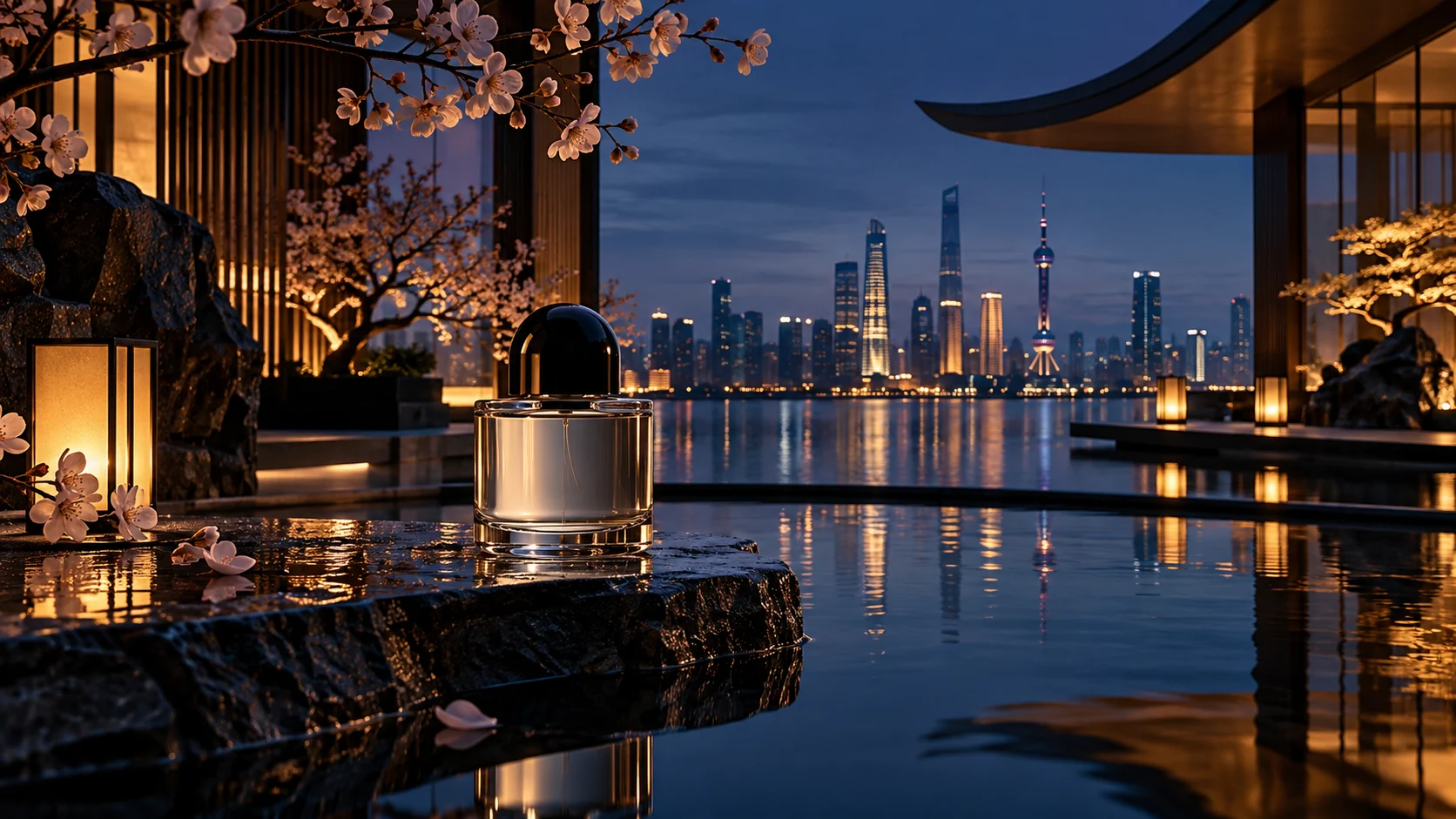
In 2026, Byredo launched a fragrance that draws attention not only for its composition, but above all for its strategy. Named 00:00, the creation was presented as an exclusive release for the Chinese market.
The fragrance is signed by French perfumer Fanny Bal and belongs to the woody floral musk family.
What Byredo 00:00 smells like
The fragrance opens with bergamot and rosemary. Gardenia and moss appear in the heart. The base combines Akigalawood, Georgywood and white musk.
The result is fresh, aromatic, woody and musky, with a structure that combines natural materials and modern molecules.
The most interesting aspect goes beyond the olfactory pyramid
The most relevant point about 00:00 may not lie only in its notes. It lies in the decision to create a fragrance intended specifically for one market.
For decades, major brands worked mainly with global launches and adapted campaigns, communication and distribution by region. A market-exclusive product, on the other hand, allows the local market itself to become part of the fragrance concept.
The regionalization of perfumery
The global luxury market is paying increasing attention to differences in behavior, aesthetics and consumption between regions. This creates room for fragrances designed for specific audiences instead of one olfactory proposition meant for the entire world.
The strategy can generate exclusivity, strengthen local presence and create a deeper cultural connection with certain consumers.
Why China matters
Byredo has a physical presence in several Chinese cities, including Beijing, Shanghai, Chengdu, Guangzhou, Shenzhen and other major urban centers. This shows that the region already plays an important role in the brand’s retail strategy.
Launching an exclusive fragrance reinforces that importance and suggests a higher level of offer personalization.
Could we see more regional fragrances?
It is a hypothesis worth watching. As the global fragrance market grows, brands may begin creating products specifically for China, the Middle East, Latin America or certain European regions.
This movement could be particularly interesting for Arab houses accelerating their international expansion.
The next stage of fragrance globalization may seem contradictory: the more global the market becomes, the more local some perfumes may become.