






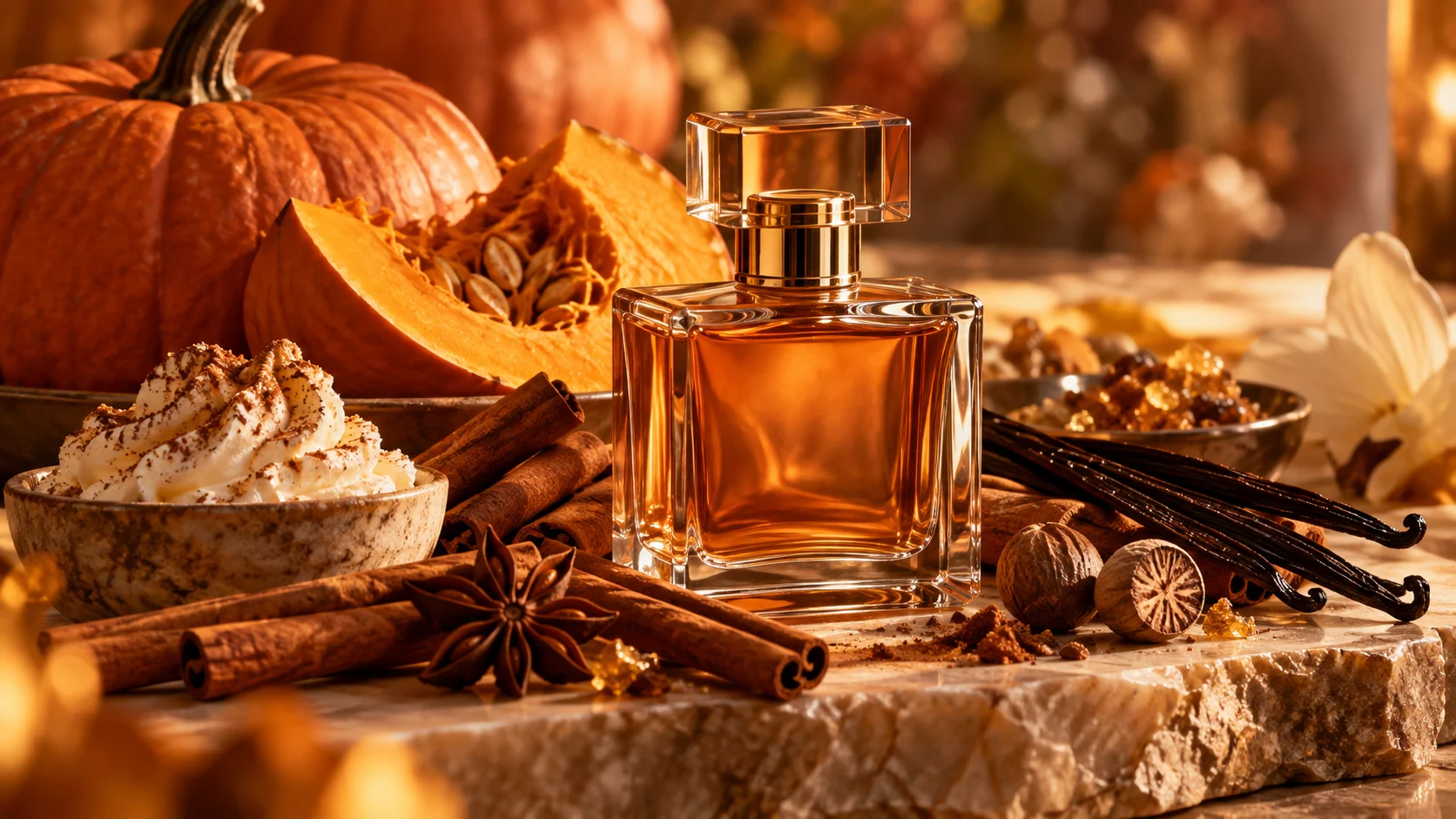
Every year, while summer is still lingering in the Northern Hemisphere, the industry begins announcing autumn. Shop windows change, coffee chains bring back their seasonal menus, and a combination of pumpkin, cinnamon, nutmeg, clove and sweetness returns to the center of consumer culture. Pumpkin spice is no longer simply a flavor associated with coffee: it has become an olfactory, visual and emotional code that moves across food, candles, body care and perfumery.
That strength became even clearer with new market data. According to an analysis published by BeautyMatter, products with “pumpkin spice” in their names generated around US$66.5 million on Amazon during the 12 months ending in August 2026, up 17% from the previous year. The figure spans multiple categories and should not be confused with perfumery revenue alone. Even so, it helps explain why the beauty industry continues trying to capture the same emotional association.
Why does pumpkin spice return every year?
Many trends depend on novelty. A viral ingredient, a new accord or a TikTok aesthetic can explode quickly and disappear a few months later. Pumpkin spice works differently because its commercial strength lies precisely in repetition.
It has a calendar. It disappears for part of the year and comes back when consumers already expect to see it. That temporary absence prevents complete saturation and turns the reunion into a ritual. In practice, seasonality creates a kind of “automatic relaunch” every year.
The logic is especially powerful because it combines smell, memory and climate. Cinnamon, nutmeg, clove, vanilla, burnt sugar, baked dough and warm woods activate an imaginary of comfort, kitchens, desserts and cooler temperatures. Even people who live in regions where autumn does not carry the same cultural landscape recognize this repertoire through films, television, social media and global campaigns.
Beauty learned to use the food calendar
The phenomenon began far beyond perfumery, but the beauty industry quickly learned that a recognizable smell can migrate between categories. According to the data cited by BeautyMatter, searches for pumpkin-spice-related products grew in unexpected segments, including deodorants, body washes, body wipes and even hair color.
On TikTok, interest in fragrance associated with the term expanded significantly during the period analyzed. That does not mean “pumpkin perfume” is about to dominate the market, but it reveals something more important: consumers already understand pumpkin spice as an olfactory atmosphere, not merely as a culinary ingredient.
That is exactly where perfumery finds room to work.
Gourmand has matured
For many years, calling a fragrance gourmand almost always meant vanilla, chocolate, caramel and sugar. The territory is much broader today. Pistachio, coffee, milk, rice, tea, honey, baked goods, cereal, candied fruit, butter, salt and spices all appear in compositions that try to reproduce gustatory sensations without necessarily smelling like a literal dessert.
Pumpkin spice benefits from this evolution. Instead of simply reproducing the most predictable combination of pumpkin and cinnamon, brands can explore the concept through toasted woods, resins, amber, dry vanilla, cool spices, creamy accords or coffee nuances.
This allows a popular reference to reach different levels of sophistication. A mass-market body mist can work with a direct fresh-baked-cake effect, while a niche house can interpret the same universe more abstractly, bringing spices closer to woods, incense, lactonic effects or leather.
The US$66.5 million figure needs to be read correctly
There is an important detail that prevents an interesting statistic from becoming a misleading headline. The US$66.5 million cited in the research corresponds to all products with “pumpkin spice” in the name sold on Amazon during the period studied. The beauty and personal-care slice was smaller.
BeautyMatter itself reports that beauty and personal-care products containing the term in their titles generated around US$2.1 million during the 12 months to August 2026, with a year-over-year decline. However, the first weeks of the following season started stronger: between August 30 and September 19, estimated sales reached US$435,000, up 17% compared with the same interval a year earlier.
This difference is important because it shows two things at once. First: pumpkin spice is not exploding linearly across all of beauty. Second: the theme retains the ability to trigger cycles of demand and new launches, especially when the seasonal window arrives.
From virality to consumption ritual
The most interesting thing about pumpkin spice is that it has already survived the “trend” stage. Trends usually depend on surprise. Rituals depend on recognition.
When consumers expect a certain sensation to return at a particular time of year, brands are no longer competing only through novelty. They are competing for a place inside an established behavior. It is the same logic behind denser perfumes in winter, citrus in summer or holiday editions — but with an olfactory signature that has developed a cultural identity of its own.
For perfumery, the lesson goes beyond pumpkin. The market is learning that gourmand accords can be organized around memory, occasion, season and lifestyle. That creates editorial and commercial possibilities far broader than simply launching “another sweet perfume.”
What this signals for upcoming launches
The growth of gourmand fragrance in recent years does not seem to point toward a single dominant note. The more consistent movement is the fragmentation of the genre into micro-territories. Some consumers want dense desserts; others seek clean creaminess; some prefer coffee, lactonic effects, sugared fruit or dry spices.
Pumpkin spice occupies only one of these territories, but it is an excellent case study because it demonstrates how popular culture, seasonality and sensory memory can turn an accord into a recurring commercial platform.
For Atlas Parfum, this kind of data matters because it helps separate hype from established behavior. Pumpkin spice may change in format and intensity, but the logic that supports it — edible smells connected to memory and comfort — continues to influence contemporary perfumery.