




When a perfume reaches the shelf, almost all attention goes to the bottle, the brand name and the perfumer. Long before that, however, there is a complex chain of cultivation, extraction, transformation and standardization behind the raw materials that make the formula possible. It is in this less visible layer of the industry that Symrise has just strengthened its position.
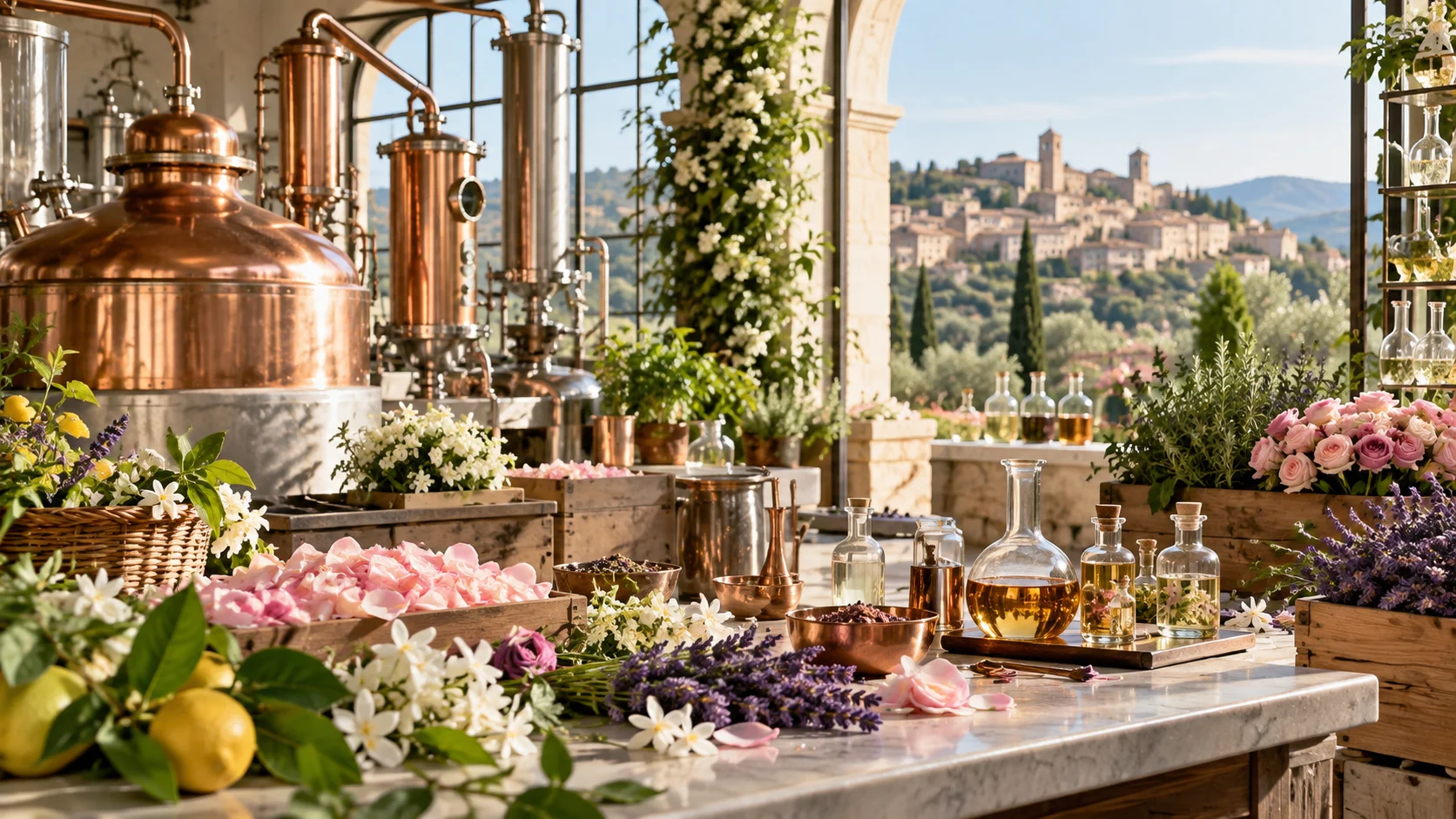
On September 22, 2026, the company opened a new Lautier 1795 facility in the Grasse region of southern France. The investment expands Symrise’s capacity in premium natural ingredients and brings sourcing, transformation, production, innovation and fragrance creation closer together within the same ecosystem.
The opening came only days after another important move: on September 16, Symrise completed the acquisition of 100% of Floral Concept, a French company specializing in high-quality natural ingredients and based in Saint-Cézaire-sur-Siagne, also in the Pays de Grasse.
Lautier 1795: tradition turned into an industrial platform
The Lautier name refers to more than two centuries of work with natural raw materials. According to Symrise’s official announcement, the new facility combines more than 230 years of specialist knowledge with modern processing technologies.
This matters because “natural” and “traditional” do not necessarily mean old-fashioned processes. Today’s industry needs to extract, purify, standardize and document raw materials with levels of consistency and traceability far beyond those expected decades ago.
A jasmine absolute, citrus essence or resinous extract may remain plant-derived, but its industrial journey involves quality control, chemical analysis, regulatory safety and production technology.
Why does Grasse still matter?
Grasse is often presented romantically as the “world capital of perfume.” The title may sound touristic, but there is a concrete economic reason for its persistence.
The region concentrates growers, processors, laboratories, fragrance houses, perfumers, specialists and a network of knowledge accumulated over generations. That concentration creates an effect similar to other industrial clusters: nearby suppliers and talent accelerate collaboration and innovation.
For a global company like Symrise, maintaining a strong presence in this ecosystem means access not only to raw materials, but also to specialized knowledge.
The Floral Concept acquisition completes the strategy
The opening of Lautier 1795 makes more sense when viewed alongside the acquisition of Floral Concept.
When announcing the completion of the deal, Symrise described the operation as part of the creation of a specialized Premium Naturals cluster in Grasse. Floral Concept will work alongside Maison Lautier 1795 within the fragrance division.
This suggests a strategy of integration. Rather than relying on capabilities spread across different locations, the group is bringing sourcing, transformation and creation together inside a coordinated platform.
For clients — particularly luxury and niche brands — that can mean faster access to exclusive ingredients, joint development and greater security of supply.
Natural ingredients are not being replaced by molecules
There is a simplified narrative that modern perfumery is abandoning natural ingredients in favor of synthetic molecules. Symrise’s investment shows why that reading is incomplete.
Synthetic molecules are fundamental to contemporary perfumery. They can create effects that do not exist directly in nature, improve stability, reduce pressure on vulnerable species and offer alternatives to expensive or problematic raw materials.
But this does not eliminate the value of an essential oil, absolute, resinoid or natural extract. On the contrary, many fragrances use naturals and synthetics together precisely because they offer different qualities.
A natural raw material has enormous chemical complexity. Hundreds of molecules may contribute to its smell. Reproducing that exact balance in the laboratory is very different from creating a molecule inspired by one of its facets.
Luxury also competes for access to ingredients
In fine fragrance, differentiation does not happen through marketing alone. Access to specific raw materials can directly influence the character of a formula.
When large fragrance houses invest in premium-natural supply chains, they also increase their ability to offer clients exclusive ingredients, differentiated grades and stronger origin stories.
This is especially relevant in a market where consumers are paying more attention to raw materials. Oud, iris, rose, jasmine, vanilla, sandalwood and citrus are no longer just technical words; they have become communication arguments.
Sustainability and resilience become part of the same discussion
Symrise says the new platform is also intended to strengthen the resilience of its portfolio. That word matters.
Natural ingredients depend on climate, harvests, agriculture, geopolitics and logistics. Drought, flooding, plant disease or a trade disruption can alter availability and price.
Ingredient companies therefore need to think about sustainability not only as an environmental message, but also as continuity of business. Closer relationships with suppliers and local technical capacity help respond to these fluctuations.
Perfume begins long before the perfumer
The opening of Lautier 1795 matters because it exposes a part of the industry consumers rarely see.
A fragrance may be launched in October 2026, but the raw material used in its formula may have started being planned years earlier. Planting, harvesting, extraction, research and regulation all come before the creative moment.
When Symrise invests in Grasse, it is investing in exactly this invisible infrastructure.
Why Atlas follows ingredients, not only perfumes
Understanding perfumery requires looking beyond the final product. Changes at major ingredient houses often anticipate movements that later appear at brands.
New extraction technologies can create previously unavailable olfactory effects. Acquisitions can consolidate access to raw materials. Regional investment can change capacity, price and availability.
That is why the new phase of Lautier 1795 is more than a corporate Symrise story. It shows how the industry is reorganizing its natural-material supply chain at a moment when technology, sustainability and luxury need to coexist within the same formula.